
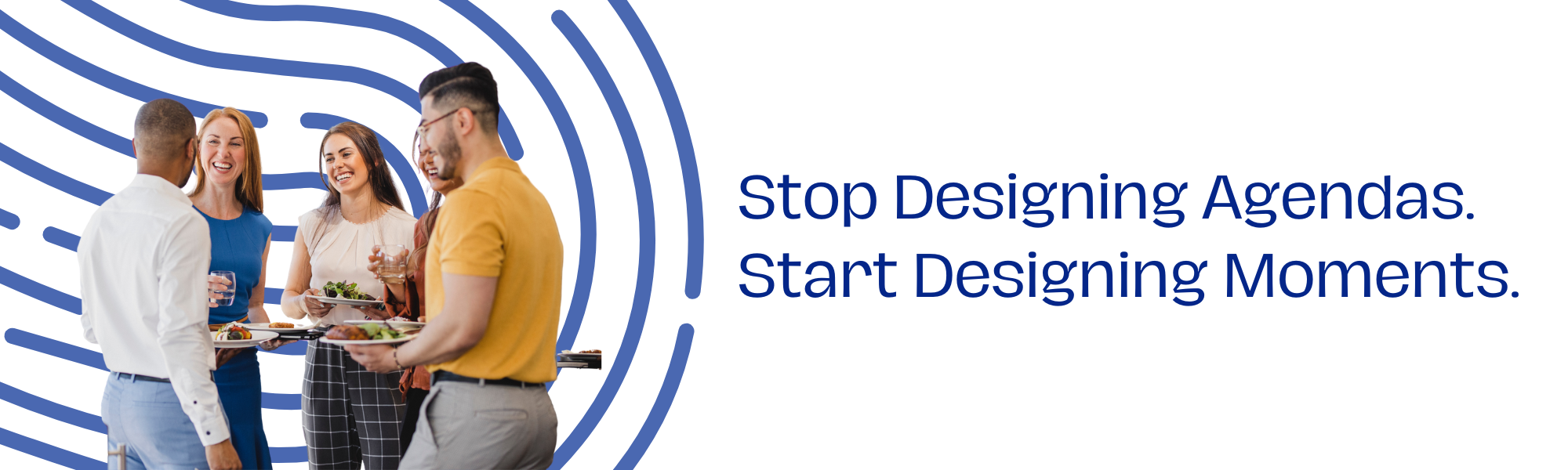
Stop Designing Agendas. Start Designing Moments.
Why the events people remember are built on FEEL, DO and CHANGE
Most events are designed to run smoothly.
Some are designed to impress.
Very few are designed to change anything.
And that’s the problem.
In our recent webinar with Lana Howden from MCI Australia, we explored what it takes to move beyond well-run events and start designing experiences that create real impact.
Why “liked” is no longer enough
Events are one of the biggest investments associations and organisations make:
- Time away from work
- Budget and sponsors
- Attention and goodwill
- Trust from members and stakeholders
That investment is usually made with an outcome in mind — stronger engagement, better retention, professional development, industry leadership, or long‑term growth.
But here’s the catch:
People can’t act on what they don’t remember.
Neuroscience has shown that memory is formed through emotion, not information alone. Which is why Maya Angelou’s words still resonate so powerfully:
“People will never forget how you made them feel.”
That insight sits at the centre of the event design framework Lana Howden has applied across global conferences and association events:

A simple model — deliberately so — that forces clarity and intention into every agenda decision.
FEEL
FEEL isn’t about theatrics or hype.
It’s about relevance.
People feel something when an event:
- Reflects their lived reality
- Reinforces their sense of belonging
- Reminds them why they chose their profession
- Makes them feel respected, inspired, or proud
Lana often reminds organisers: “If people don’t feel the event matters to them personally, they won’t remember it and they won’t come back.”
Here's some practical ways to design for FEEL (at any budget):
- Use music intentionally — nothing creates emotional tone faster
- Start with a human story, not housekeeping
- Invite children or early‑career voices to interview senior leaders
- Show how the public or community perceives the profession
- Create contrast with moments that feel different from a typical conference session
Emotion is where attention spikes and where memory begins.
DO
If FEEL captures attention, DO creates ownership.
People are far more committed to ideas and decisions they help shape. Participation moves attendees from passive listeners to active contributors — and contributors are more likely to follow through.
As Lana says:
“If participation doesn’t change something for the participant, it’s just decorative.”
Practical ways to design for DO:
- Replace some lectures with facilitated peer discussion
- Use small‑group formats rather than default plenaries
- Build hands‑on experiences (labs, simulations, practice sessions)
- Take sessions outside the room or into unexpected spaces
- Ask people to decide, create, record, or commit — not just listen
Participation doesn’t have to be complex.
It just has to matter.
CHANGE:
Change is the most overlooked part of event design and the most important.
It’s the observable shift that happens because the event existed.
Change might look like:
- A new perspective
- A behaviour change
- A decision made
- A relationship formed
- Greater confidence or clarity
“If nothing changes after people leave,” Lana notes, “then the event was a moment, not a platform.”
Legacy isn’t always a large‑scale movement.
Often it’s a small shift that alters how someone thinks or acts and compounds over time.
How to intentionally design for Change:
- Define success before the event begins
- Design backwards from outcomes, not forwards from speakers
- Build reflection and commitment into sessions
- Create follow‑up touchpoints beyond the final slide
- Ask: What will be different for our community because this event happened?
Impact shows up after the applause ends.
Three questions every agenda should answer
You can pressure‑test any agenda by asking just three questions:
- What do we want people to FEEL here?
- What do we want them to DO here?
- What do we want to CHANGE because of this moment?
If you can’t answer at least one clearly, that session probably needs redesigning.
Because without FEEL, DO or CHANGE, value erodes quickly and so does engagement.
Final thought
Event success shouldn’t be measured by attendance alone.
It should be measured by what people remember, what they act on, and what changes because they were there.
Designing for FEEL, DO and CHANGE gives organisations a simple way to be more intentional with their investment and far more effective with their outcomes.